
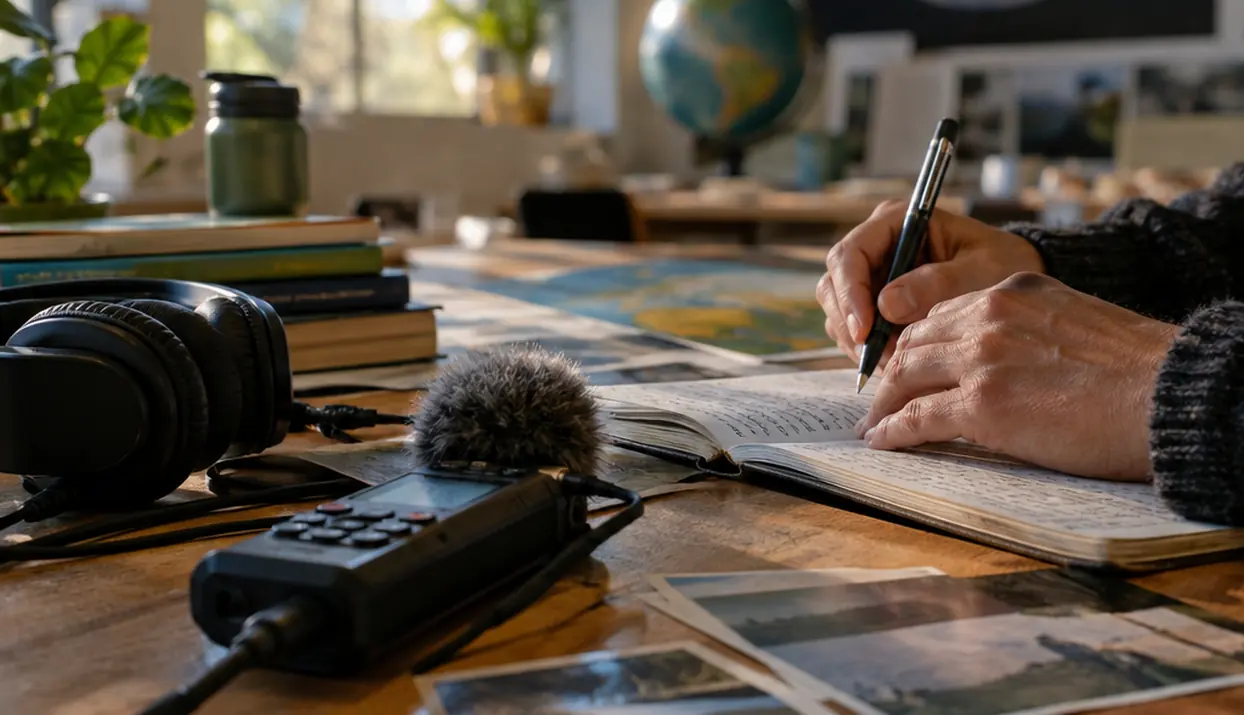
Preservation Triage for John McConnell’s Creation
John McConnell created the Authentic Earth Flag to unite humanity under the vision of Earth Day. Living educators, organizers, family members, and longtime supporters still hold unrecorded memories of how that flag was carried into classrooms, rallies, and early observances. The first planning decision in any historical preservation effort is to identify these living people who can describe direct contact with the flag, McConnell's Earth Day work, or the Earth Trustee idea. We must approach this as preservation triage rather than a general celebration of planetary symbolism.
The operational plan has four parts. A successful program must define who witnessed the flag, secure informed consent, ask for situated accounts of use, and preserve the resulting audio with searchable documentation. These four decisions determine whether those memories survive intact. The nonprofit can use this method to build a working archive with a clear chain of custody for historical narratives.
Identifying Firsthand Contact Across Four Cohorts
Classify a person by firsthand contact before assigning an interview priority. A teacher who hung the Authentic Earth Flag in a classroom, an organizer who placed it at an observance, a relative who remembers McConnell discussing the work, or a supporter who stored and circulated flags enters the core pool. Entry requires direct contact with the flag, McConnell's Earth Day work, or Earth Trustee activity. A recollection that reaches only an appreciation for globe imagery stays outside the Earth Flag witness file. Treat these four provisional witness cohorts as the foundation of the collection.
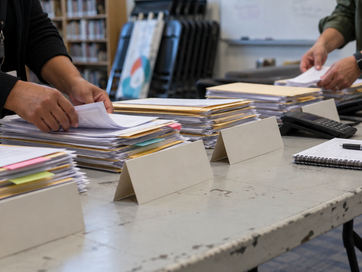
Give each prospective witness a short intake record. This document contains their name, preferred contact method, witness cohort, location of the remembered activity, approximate decade, object recalled, referral source, and assigned staff contact. Outreach identifies the nonprofit, the staff member making the request, that person's role, a return telephone number, and the proposed subject of the interview. No invented personal credentials or biographies are needed to establish trust.
Use a 15- to 25-minute unrecorded intake call to confirm firsthand contact and identify documents or flags the witness may bring. Treat any substantive recollection from that call as private intake information until separate quotation permission is obtained. Review the working witness list every 30 to 45 days during active collecting so aging or difficult-to-reach witnesses are not left indefinitely in an unscheduled file. This program records living memory of the flag and its uses, maintaining a specific scope rather than attempting a full biography of McConnell or a catch-all environmental oral history.
Structuring Informed Consent Before the Recorder Starts
Build consent as a sequence rather than a signature collected at the end of a conversation. Send the consent packet three to seven calendar days before the interview. Reserve 10 to 15 minutes at the appointment for a plain-language review before equipment is activated. Include separate choices for recording, use of the witness's name, quotation in educational material, public or restricted access, transcript publication, and reproduction of each still image or document brought to the session.
Offer a real right to pause, redact, or withdraw. Family memory of McConnell and of early Earth Day work carries intimate details that require careful handling. Record requests to pause in the session log without explanation. Mark proposed redactions by transcript timestamp, and confirm the final redacted passages in writing before a public access copy is created. If a useful statement arises in a hallway before the formal session, stop and explain the intended use. Complete the consent process, then invite the person to make the statement again on the record.
Designing Prompts to Recover Situated Flag Use
Choose the interview path after intake. Use a chronological path when the witness encountered the flag repeatedly across teaching, organizing, or stewardship work. Chronology serves a witness whose role changed over several observances. Use an object-biography path when the witness can trace one physical flag through acquisition, display, storage, repair, copying, or transfer. One surviving flag can anchor otherwise uncertain dates and transfers.
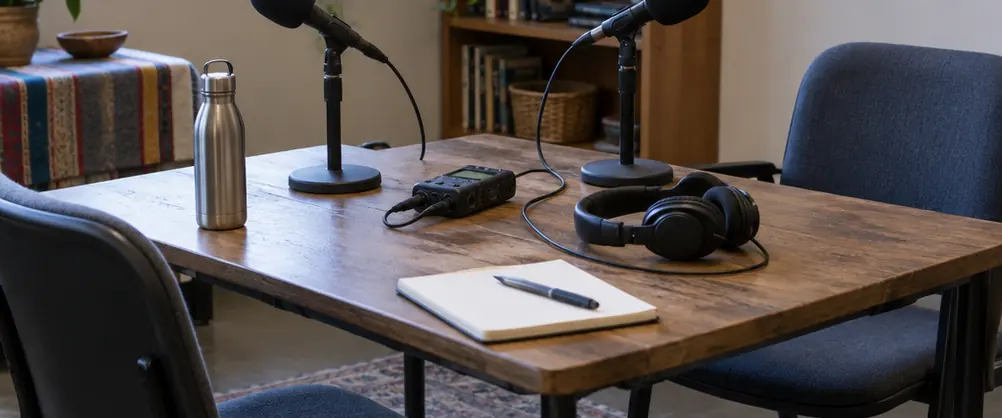
Plan a 60- to 90-minute session around one life of the flag. The core prompts cover the first encounter, classroom or rally use, contact with McConnell's Earth Trustee idea, storage, and what later educators should understand. Ask situated follow-ups. Inquire what the flag was made from, where it sat in relation to the speaker, who unfolded it, and what else was visible in the room. Ask if the date was written on a program, photograph, lesson plan, or letter. Prefer sensory, situated prompts over abstract values questions that produce slogans instead of scenes.
Assign one visible interviewer and one silent logger before the session begins. The logger records names, spellings, approximate dates, place names, mentioned documents, visible flag variants, and follow-up claims with timestamps. The logger does not conduct a second interview from off camera. With this division of labor, the interviewer maintains eye contact and narrative flow while the logger captures the metadata required for archival processing.
Establishing Chain of Custody for Audio and Transcripts
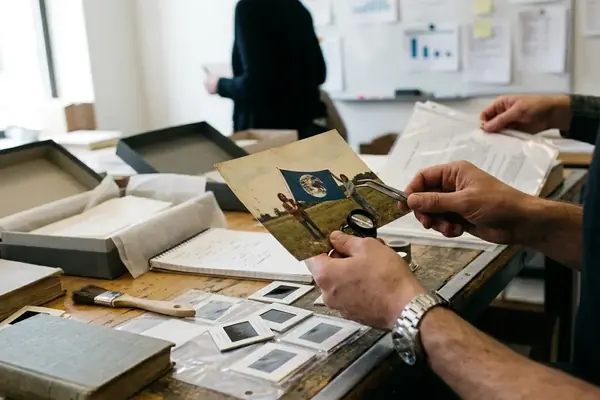
Make the preservation package part of the interview plan. Assign custody of the master before recording, create the access copy from that master, and link the audio, transcript, abstract, rights record, object releases, and session log under one stable identifier. Capture the audio master as uncompressed PCM WAV at 24-bit/48 kHz when the recorder supports it. Produce a smaller listening copy separately rather than editing or circulating the master. Video is added only when agreed to and when gesture, a flag, or a document contributes information the audio would miss.
Pair every recording with a timestamped transcript. Timestamp the transcript at every speaker change and at least once per minute. Preserve uncertain words in brackets instead of silently guessing a name or place. Create a one-page abstract of roughly 350 to 600 words containing the witness name or approved pseudonym, interview date, location, interviewer, logger, topics, named people, flag-related objects, restrictions, and unresolved factual questions.
Use one stable session stem across files—such as EF-OH-YYYYMMDD-SURNAME-01,followed by format labels for master audio, access audio, transcript, abstract, rights, log, and stills. Keep the master read-only, maintain a separate working copy, and retain an off-site backup under nonprofit control. Run a checksum comparison after initial transfer and during an annual file-integrity review. Store the rights file beside the descriptive record, while restricting access to signatures and personal contact details. A future researcher must be able to discover the Earth Flag content without opening confidential administrative files.
Structuring Files for Future Earth Day Historians
Test each completed session record against a future historian's likely reconstruction task. The reviewer asks whether the file identifies the person, date, place, flag-related action, source of any date, and boundary of the witness's observation. A worked record might state that a teacher personally unfolded and displayed an Authentic Earth Flag in a named classroom, learned the date from a surviving lesson plan, and missed the earlier meeting at which the flag was acquired. Careful packaging does not by itself establish the flag's complete public history, but it creates a documented foundation for future scholarship.
Distinguish three kinds of date evidence in the session log. Note a date remembered by the witness, a date visible on a contemporary item, and a date supplied later by staff research. Keep these distinct to maintain factual integrity. Return the draft transcript to the witness 7 to 14 calendar days after transcription is complete. Provide a 21-day review window for spelling corrections, privacy requests, and clarifications that are visibly marked as later additions.
Credit the interviewer, logger, transcriber, transcript reviewer, rights reviewer, and file-preparation staff in the session record. Record roles rather than presenting one staff member as the sole authority for the testimony. Leave gaps marked as gaps. If no family member or firsthand organizer can address a period, use a direct gap statement in the abstract, noting that no interviewed witness in the file described custody of the flag between the two documented appearances. Missing periods and conflicting recollections remain visible in the abstract instead of being converted into a smooth institutional narrative.
Drafting the Initial Intake and Consent Documents
Reserve a 60- to 90-minute planning block today to enter the first educators, organizers, family members, and longtime supporters into a living witness list. Include the referral source and the specific Earth Flag contact attributed to each person. Draft a one-page consent packet on the same working day that addresses recording, naming, quotation of Earth Flag recollections, transcript access, still images of flags or documents, redaction, withdrawal, and the witness's preferred contact route. Give every scheduled witness a record containing the assigned staff contact, proposed interview subject, appointment details, and consent status. Do not open the recorder until the signed packet for that witness has been checked and the interviewer has verbally confirmed readiness to begin.

Your Thoughts
Leave a comment.