
Key Takeaways
Reading the Green Room from soil to circuitry
The Green Room begins with a simple proposition: environmental activism becomes durable when people can practice it on an ordinary schedule.
I read Community Supported Agriculture first as an agreement, not as a produce box. A household pays before or early in the growing season, a farm uses that early support to buy seed and supplies, and both sides accept that weather will write part of the final menu. That sequence matters because it separates CSA from grocery delivery or a one-time donation.
- Community Supported Agriculture depends on season-ahead commitment. In a Midwestern pattern, members enroll in winter, farmers plant in spring, shares move through the main growing season, and the year closes with late-season accounting.
- Vincent Family Farm offers a useful Illinois example. The Rochester operation places Todd Vincent in the role of landowner and partner, while Andy Heck and Garrick Veenstra act as partner farmers responsible for production management.
- Energy history needs careful footing. Nikola Tesla is historically associated with alternating current and electromagnetic experimentation; Thomas Edison is associated with early direct-current distribution and centralized electric-light systems.
- Activism is not protest alone. CSA membership, farm logistics, renewable-energy support, conservation education, and environmental communications can all carry Earth-aware commitments into daily work.
Main Point: The thread is not vegetables versus technology. It is support: how people commit resources, attention, labor, and public symbols to the care of one planet.
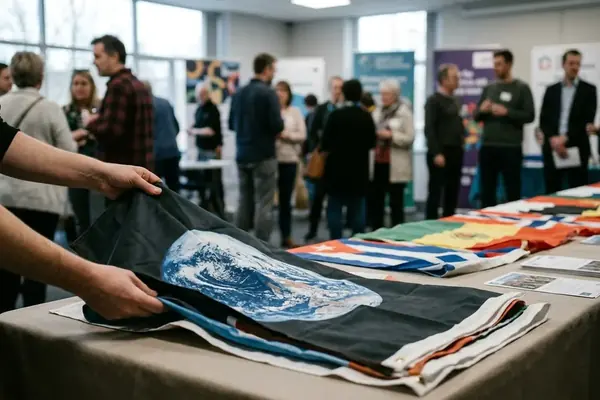
That is why the Earth Flag belongs in this conversation. It does not replace policy or farm work. It gives them a visible civic language: one Earth, shared responsibility, public commitment.
Community Supported Agriculture Explained
The agreement comes before the harvest
A CSA is easiest to misunderstand when it is described as a subscription. That language is convenient, but it hides the main mechanism. The member is not simply ordering a predictable basket of vegetables; the member is entering a seasonal compact with a grower.
The operational sequence is plain enough to inspect step by step. Member signup usually occurs during January through March. Before peak planting, the farm purchases seed, soil amendments, trays, tools, fuel, and other supplies. During the main growing season, the farm assembles weekly or biweekly harvest shares. After the final distribution, the farm can look back at yields, member feedback, and remaining obligations before planning the next cycle.
This is finance at human scale.
The upfront payment moves some risk away from the farmer’s kitchen table and into a community structure. If a wet May delays transplanting, members may see a slower start. If a dry July lowers leafy-green quality, the weekly share changes. If an early frost cuts the fall harvest short, the season ends with less abundance than everyone hoped. In a strong year, the same agreement can carry the reward in the other direction: more tomatoes, heavier squash, better storage crops, and a more confident farm budget.
What the share teaches
Early-season shares often lean on greens and radishes. Mid-season shares may bring tomatoes and beans. Late-season shares move toward squash and storage crops. The exact pattern depends on field conditions, not a warehouse catalog.
That variability is the point, and also the constraint. CSA is a strong fit for households that can cook seasonally and tolerate uneven weekly harvests; it is less useful as a replacement for precise grocery planning. I make that caveat early when I explain the model because honesty protects the relationship. A member who expects identical boxes will be frustrated. A member who expects participation in a living season can become one of the farm’s strongest allies.
Caution: Presenting CSA as simply a vegetable subscription misses the defining risk-sharing agreement and makes the model sound interchangeable with ordinary grocery delivery.
Organic vegetable cultivation fits naturally inside many CSA programs, but it is not the whole definition. The deeper design is reciprocal: farms receive early support, and members receive food with a visible chain of responsibility behind it.
Vincent Family Farm Implementation
A partnership model in Rochester, Illinois
Rochester, Illinois matters here because central Illinois does not offer a year-round coastal vegetable calendar. Spring planting pressure is real. Midsummer abundance can arrive quickly. Fall frost risk sits at the edge of every late-season plan.
Within that setting, Vincent Family Farm is best understood as a partnership rather than a single-founder story. Todd Vincent serves as landowner and partner. Andy Heck and Garrick Veenstra serve as partner farmers, carrying the production-management work that turns land access into actual food. Those distinctions are not ceremonial. Land stewardship, crop planning, member communication, harvest labor, and distribution logistics all require different kinds of judgment.
The farm’s CSA approach followed the influence of a 2008 program at a nearby faith-linked farm initiative. That history should be kept in proportion. The earlier program helps explain the local pathway, but the Rochester operation stands on its own as an example of how a CSA model can move from idea to working practice.
From land stewardship to member support
Program design begins with roles. The landowner-partner holds responsibility for the ground and the continuity of place. The partner farmers translate that ground into crop rotations, seed orders, planting schedules, harvest standards, and field decisions under pressure. Members bring advance commitment and, when the model is working well, patience with the unevenness of an Illinois growing season.
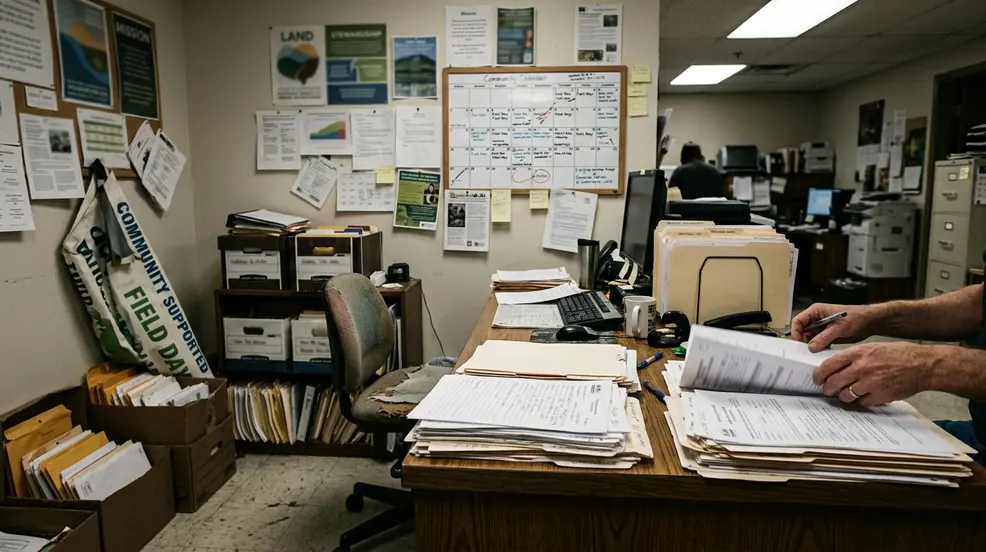
Stakeholder feedback indicates that this role clarity matters most when the season becomes difficult. A wet spring does not merely delay plants; it tests whether members understand why their early shares look lean. A hot, dry spell does not only stress greens; it tests whether communication is strong enough to keep trust intact.
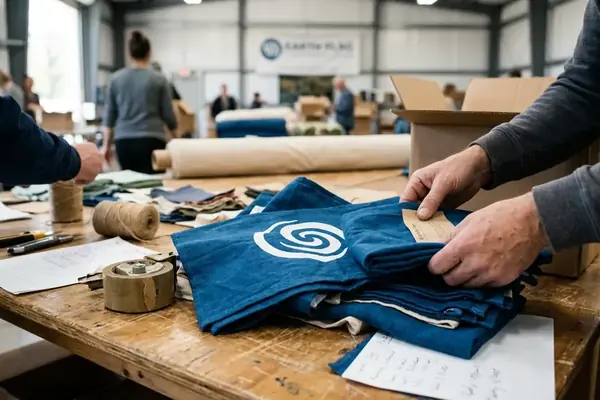
Here the Earth Flag’s symbolism becomes practical rather than decorative. A flag can mark a public ethic, but the ethic has to survive Thursday harvest assembly, muddy boots, and the quiet arithmetic of seed invoices.
Expert Tip: When evaluating a CSA farm, ask three separate questions: who stewards the land, who manages production, and how members receive field updates during difficult weeks.
That three-part test is more useful than asking whether the farm has good intentions. Good intentions are common. Durable structure is rarer.
Alternative Energy and Historical Technology
Correcting the AC/DC frame
Any Green Room discussion that moves from farms to energy has to slow down at the historical threshold. The public rivalry over alternating current and direct current belongs chiefly to the late 1880s and early 1890s. It is not a modern climate-policy debate in costume.
The basic alignment is clear. Tesla is connected with alternating-current systems and electromagnetic experimentation. Edison is connected with direct-current distribution and early centralized electric-light systems. Reversing those roles does more than make a factual mistake; it distorts the lesson that the history can actually teach.
The lesson is about infrastructure.
Electric systems do not spread only because an idea is elegant. They spread through hardware, finance, public trust, safety arguments, distribution networks, and compatibility with existing institutions. Edison’s direct-current work fit an early model of centralized electric lighting. Tesla’s alternating-current contributions opened different possibilities for transmission and system design. The environmental relevance lies in that tension between invention and adoption.
What history can and cannot prove
Historical electricity debates can inform how we think about grids, transmission, and technological lock-in. They can help citizens ask better questions about cleaner energy: What must be built? Who maintains it? Which old systems resist replacement? Which new systems depend on public confidence before they can scale responsibly?
They do not, by themselves, prove the viability of any modern non-polluting energy claim. That distinction keeps the conversation sober. Reverence for Tesla’s imagination or Edison’s system-building cannot substitute for engineering review, policy design, maintenance planning, and material accountability.
Still, the historical frame has value. It reminds us that technology becomes civic reality only when people organize around it. Wires, farms, flags, and careers all require institutions that outlast enthusiasm.
Main Point: The AC/DC rivalry is not a shortcut to modern energy answers. It is a disciplined reminder that technical systems carry social commitments.
That is the bridge to activism. Cleaner energy advocacy needs imagination, but it also needs people who can read the past without turning it into myth.
Activism Through Green Technology and Careers
Activism as sustained support
I define activism here as sustained support, not protest alone.
That definition changes the map. A household joining a CSA is practicing one form of consumer activism because it commits money early, accepts shared seasonal risk, and keeps a local farm in relationship with its eaters. A student entering soil health work is practicing another form. So is the person who learns farm logistics, supports local food distribution, trains for renewable-energy installation support, teaches conservation education, or writes clear environmental communications for a public audience.
None of these paths is theatrical. That is part of their strength.
The Green Room framework holds them together by asking a first-principles question: what kind of support does planetary stewardship require? Some support is financial, as in CSA enrollment before harvest. Some is technical, as in energy systems that must be installed and maintained. Some is educational, as in helping neighbors understand why an Illinois farm share changes between May and October. Some is symbolic, as when the Earth Flag gives a community a visible sign of allegiance to the whole planet rather than to a single private interest.
A practical sequence for communities
A community that wants to act can begin without pretending to solve everything at once.
- Name the commitment. Use the Earth Flag or a similar public symbol to state that local action belongs to a planetary ethic.
- Support a working model. If CSA fits the community, help households understand the seasonal agreement before asking them to enroll.
- Build the labor pathway. Connect interested residents to practical green-career skills: soil health, distribution, installation support, education, and communications.
- Teach the history carefully. Use the Tesla-Edison distinction to discuss grids, transmission, and lock-in without making exaggerated claims.
- Return to the season. Review what worked after the final harvest distribution or project cycle, then adjust the next commitment.
This sequence is modest by design. It favors repeatable work over grand declarations. A farm season teaches that discipline well: enroll, plant, cultivate, harvest, account, begin again.
Caution: An Illinois CSA has a compressed outdoor growing season compared with warmer regions, so planning must account for spring pressure, midsummer abundance, and fall frost risk.
The Green Room, then, is not a room in the literal sense. It is a civic workshop. In it, the Earth Flag hangs not as decoration, but as a reminder that practical commitments, honestly kept, are how planetary stewardship becomes visible.



Your Thoughts
Leave a comment.