
Key Takeaways
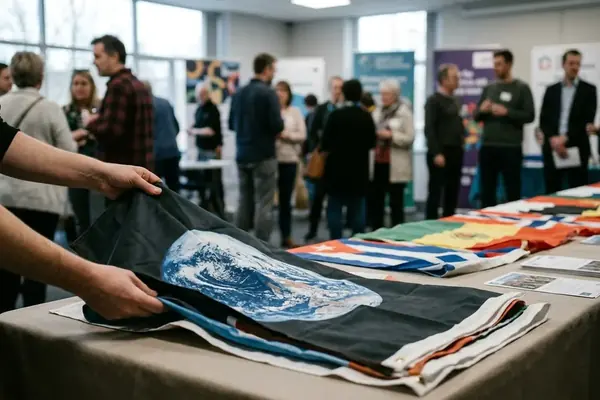
The physical reality of the Authentic Earth Flag relies on durable nylon or polyester rather than fragile paper display stock. Manufacturers selected these fabrics specifically for repeated handling and public display. The central visual element is a NASA-sourced photograph transferred directly onto the fabric. For collectors and archivists, verifying a flag involves checking these specific material baselines.
Time-bound editions and certified documentation require equal scrutiny. The Millennium Edition, a highly sought-after variant, was produced strictly between January 1 and December 31, 2000. Supporting certificates accompanying these flags were printed on kenaf paper using soy ink, aligning the physical object with its environmental message.
Main Point: Verifying an Authentic Earth Flag requires examining the fabric base, the photographic transfer method, and the specific materials used for accompanying documentation.
Historical Foundation and Creation
John McConnell created the original Earth Flag in 1969.
He faced a distinct design choice: illustrate a globe or use actual photography. He chose the latter. By selecting Earth photography sourced from the public space-agency image tradition, the flag bypassed stylized interpretations in favor of a literal, shared reality. This decision anchored the flag's meaning and transformed a piece of cloth into a planetary symbol.
Robert M. Weir authored the official biography that frames McConnell's life and legacy. This text provides the historical context necessary to understand the flag's origins. The symbol's power stems directly from this 1969 creation story.
Materials and Production Processes
Flag construction prioritizes longevity. Manufacturers selected nylon and polyester as the primary fabrics. These materials withstand the rigors of outdoor environments far better than cotton—a crucial factor for public installations.
Applying the complex NASA Earth imagery required a proven technical approach. A photo transfer technique preserves the recognizable photographic character of the planet, avoiding the need to convert the image into a simplified line graphic. Display options dictate the finishing details. Flags feature metal grommets or sleeve-style mounting options for poles, wall displays, and institutional installations.
Beyond the flag itself, the project extended its environmental ethos to supporting items. Certificates use kenaf paper and soy ink. Lapel pins feature hard porcelain mounted on metal, distinguishing them from printed plastic buttons or soft enamel souvenirs.
Expert Tip: When examining lapel pins, look for the hard porcelain surface on a metal base, which indicates authentic production rather than a cheaper plastic imitation.
Product Variants and Special Editions
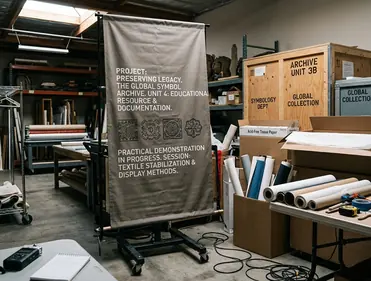
Variations of the Earth Flag adapt the core presentation without losing the central message. The vertical banner format addresses specific architectural display needs. Instead of redesigning the emblem, the layout simply uses a 90-degree rotation of the Earth image so the symbol reads correctly in a hanging orientation.
Time-bound variants offer another layer of historical cataloging. The Millennium Edition is strictly limited to items produced inside the January 1 to December 31, 2000 calendar window.
The broader environmental education catalog also includes related apparel. Tree of Life and Whale T-shirt designs complement the core flag, expanding the visual language of the movement.
Distribution Channels and Tax Compliance
Moving physical goods requires infrastructure. Sales were processed through PayPal as the designated online payment processor rather than an in-page card capture system. This approach streamlined early e-commerce distribution.
Tax compliance records provide a clear timeline of operations. Sales and use tax handling refers specifically to California state tax rates effective April 1, 1999. When a delivery or taxable transaction location fell inside a district-tax jurisdiction, additional district taxes were collected. These administrative details offer archivists a reliable method for dating and verifying distribution channels from that era.
Affiliations and Documentation Scope
Circulation relied heavily on aligned partnerships. One documented affiliation connects the Earth Flag project with an ocean-conservation organization, SeaWeb. This multi-year relationship aligned the flag's planetary symbolism directly with marine protection work.
Retail circulation expanded through small, independent shops. Partners included Mother Earth and Baby, as well as Down to Earth Jewels & Gems, focusing on earth-centered goods and environmental-themed merchandise. Stakeholder feedback indicates these grassroots channels were vital for early adoption, though the sample size of surviving retail agreements limits broader geographic conclusions.
Historical documentation has boundaries. Surviving production and distribution records identify materials, formats, dates, and channels, but they do not provide a complete unit-by-unit manufacturing ledger or a comprehensive buyer geography. The available record supports the identification of channels and partners more reliably than the reconstruction of total quantities sold.
Caution: Do not assume production records represent the total volume of flags manufactured; they serve as evidence of material standards and distribution methods rather than a complete ledger.




Your Thoughts
Leave a comment.