
Key Takeaways
Implementation Friction Came First
The Earth Trustee Program is easiest to misunderstand when it is described only as a global idea. In practice, its public record is strongest where volunteers, educators, and local organizers had to translate a planetary ethic into a room, a ceremony, a lesson plan, or a short caption beside the Earth Flag.
For recent implementation, I use a 2018-2023 review window for contemporary public-facing materials and keep John McConnell's earlier stewardship work in a separate historical layer. That separation matters. The late twentieth-century origin story gives the program moral continuity, while the recent materials show how people actually carried the language into schools and community settings.
- Core obstacles centered on cultural adaptation and resource distribution. The word trusteeship carried different implications across languages and civic traditions.
- Local partnerships proved essential for sustained engagement. A flag display could introduce the idea, but a teacher, organizer, or archivist usually kept it alive.
- Qualitative shifts in awareness appeared over multi-year periods. The evidence supports continuity of educational and symbolic use, not measurable global adoption.
Main Point: The program's implementation record should be read as a history of interpretation, not as a conventional expansion campaign.
Three Settings, Three Explanations
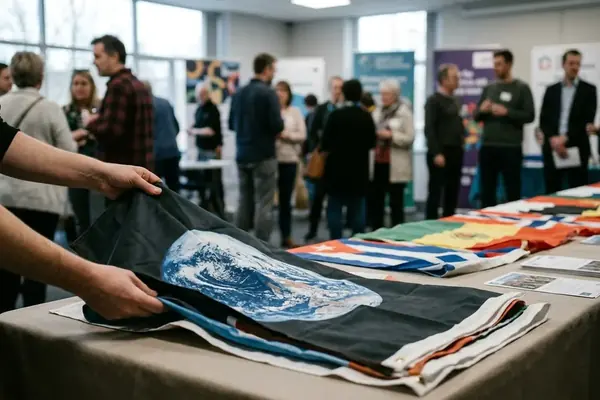
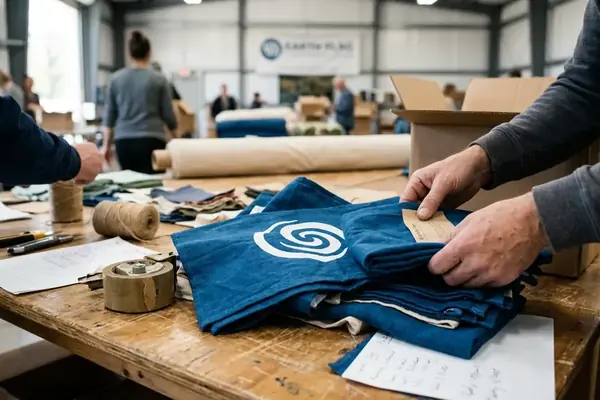
A classroom could hold the historical context: McConnell, Earth Day, peace, stewardship, and the image of the planet as common home. A community group often needed a more applied explanation: what does trusteeship ask of neighbors, elders, and youth? A ceremonial display required the shortest treatment of all, usually a spoken introduction or caption connecting the blue-field Earth image to shared responsibility.
That variation was not a defect. It was the condition of use.
Program Foundations and Objectives
McConnell's Stewardship Philosophy
The foundation begins with John McConnell's view of Earth as a shared home. In the late 1960s and early 1970s, his public advocacy linked peace, environmental responsibility, and planetary identity at a time when images of Earth from space were changing civic imagination. The Authentic Earth Flag, with its blue-field Earth image, belongs to that lineage.
McConnell's idea of trusteeship did not ask people to replace their local loyalties. It asked them to place those loyalties inside a wider obligation. First comes the planet as a life-supporting whole. Then come nations, institutions, schools, and households as practical sites where responsibility can be exercised.

Education Before Membership
The program's objective was not built around membership-gated participation. It favored open access: reproducible educational materials, volunteer explanation, classroom discussion prompts, and permission-oriented sharing. That design choice gave the Earth Flag a low threshold for use, especially where schools or community groups could not rely on paid facilitation.
The symbolic work was deliberately simple. Present the Earth as a shared home. Explain the historical connection to McConnell's stewardship message. Invite participants to consider what moral responsibility looks like in their place.
- Introduce the Earth Flag as a historical symbol of planetary stewardship.
- Connect the symbol to local questions such as water protection, peace education, civic service, or intergenerational responsibility.
- Let participants interpret trusteeship through their own responsibilities rather than through a single master script.
That sequence sounds modest, but it carries a demanding theory. A symbol cannot steward anything by itself. It becomes useful when people repeatedly attach duties, memories, and public commitments to it.
Challenges Encountered During Rollout
When Trusteeship Did Not Translate Cleanly
The most serious rollout challenge was linguistic and civic, not decorative. In some settings, a direct translation of Earth Trustee could suggest legal ownership or administrative authority. That weakens the intended meaning, which is shared moral stewardship rather than control over property.
Language coordination commonly required at least two review passes: one for literal meaning and one for cultural tone. The first pass asked whether the words matched the source idea. The second asked whether the phrase would land with the right ethical weight in a classroom, civic hall, or public ceremony.
Caution: A literal translation can preserve vocabulary while damaging meaning. For Earth Trustee materials, tone review is not cosmetic; it protects the moral premise of the program.
Coordination Without a Command Center
Cross-time-zone work made the program slow in ordinary ways. Organizers relied on email-style exchanges, shared files, delayed approvals, and local judgment rather than live global meetings. That mode suited volunteers, but it also meant that interpretation often advanced unevenly.
Resource constraints shaped the format of the materials. Low-budget dissemination favored printable one-page summaries, short historical captions, and reusable classroom prompts. Many educators could not depend on centralized shipping or paid facilitators, so the strongest materials were the ones that could survive photocopying, forwarding, and adaptation.
Momentum Rose and Fell With People
Where a stable volunteer contact existed, the idea had a path into local practice. Where that person changed roles, retired, or lost capacity, activity often moved from active programming to passive preservation. The imagery might remain online, and the language might stay archived, but the living explanation thinned.
This is a familiar pattern in grassroots stewardship work. Symbols persist; programs need people.
Solutions and Decision Rationale
Why Decentralization Became the Practical Model
A rigid master script was tried for consistency, then dropped because it flattened regional meaning. The decision logic moved toward decentralization after organizers saw that one English-language explanation could not carry the same ethical nuance everywhere. Consistency remained important, but it had to sit at the level of principles rather than phrasing.
The workable packet had three layers:
- A short flag caption for ceremonies, displays, and quick introductions.
- A one-page historical explanation connecting McConnell, Earth Day history, peace, and planetary stewardship.
- A discussion guide that educators or civic groups could adapt for students, youth programs, or local gatherings.
This structure solved a real design problem. It let a teacher teach, a ceremony proceed, and a volunteer explain the same symbol without pretending those settings were identical.
Using Existing Environmental Calendars
Integration with existing Earth Day networks reduced organizer burden. Groups could add the Earth Flag and trusteeship language to gatherings they were already planning rather than create stand-alone programming from nothing. That choice respected volunteer time and avoided treating symbolic education as a separate administrative burden.
There is a first-principles reason for this. Stewardship language becomes durable when it attaches to recurring civic rhythms. Earth Day, school assemblies, youth service days, local environmental commemorations, and interfaith peace gatherings already create attention. The program's role was to give that attention a planetary frame.
Why Storytelling Carried More Weight Than Targets
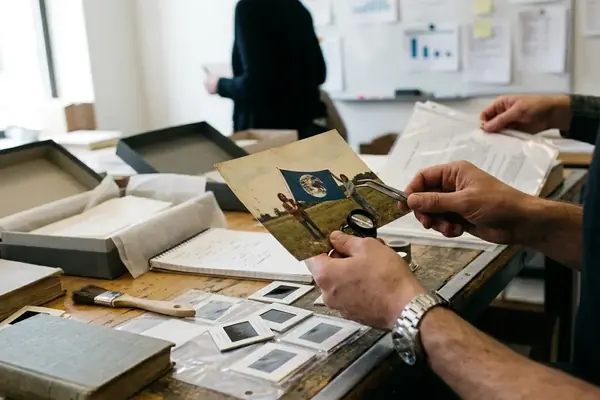
The program's evidence base favored qualitative storytelling over quantitative targets. Dated anecdotes, classroom reflections, organizer correspondence, photographs of displays where permission existed, and short descriptions of how the symbol was explained all preserved implementation texture. They showed not only that the flag appeared, but how people understood it.
Expert Tip: When documenting Earth Trustee activity, record the date, setting, audience, explanation used, and local concern connected to the symbol. Those details are more useful than a bare claim of participation.
Documented Outcomes and Context
Educational Use in Schools and Community Groups
The strongest defensible outcome is continuity of use. Educators and advocates kept returning to the Earth Flag because it gave abstract planetary responsibility a visible form. In classrooms, it often introduced planetary citizenship. In community settings, it helped frame a short historical reading or a discussion about shared obligations.
The distinction between national identity and shared Earth identity proved especially useful with young people. A national flag asks one set of questions: belonging, history, duty, sacrifice. The Earth Flag asks another: what responsibilities remain when borders do not contain the problem?
That question is practical. Water protection, peace education, intergenerational responsibility, and civic service all become easier to discuss when the room has a symbol that points beyond any single jurisdiction.
Cross-Border Dialogue Through One Image
Cross-border dialogue appeared most clearly when participants discussed the same image while attaching different local concerns to it. One group might read the flag through watershed care. Another might read it through peace education. Another might see it as a reminder of responsibility to future generations.
The common image did not erase local difference. It made difference discussable.
Continuity and Volunteer Cycles
Long-term continuity depended on volunteer leadership cycles. When a teacher, local organizer, or archivist remained active, the program language tended to stay visible. When that person moved on, the work could become archival until a new steward resumed outreach.
This limits what can be claimed. Recurring educational references, archived program language, reproduced flag imagery, and volunteer-led interpretation across regions indicate persistence. They do not establish uniform adoption or comprehensive reach.
Scope and Limitations of Findings
A Historical and Educational Case Study
This analysis is a historical and educational case study, not an audit. It draws on public-facing program records from 2018-2023 for recent implementation observations and treats earlier material connected to McConnell as historical background. Those layers should not be blended as if they were the same type of evidence.
The findings support interpretation of educational and symbolic continuity, not a comprehensive measurement of global participation.
Evidence Types Should Stay Separate
Archived program text, educator-facing materials, public symbolism, and interpretive commentary each answer different questions. Archived text shows how the program described itself. Educator-facing materials show how the idea could be taught. Public symbolism shows where the image appeared. Commentary shows how participants or observers made meaning from it.
No uniform metrics were applied across all participating regions in the public record reviewed here. For that reason, I do not assign enrollment totals, country counts, survey findings, or retention rates.
Evidence Check for Educators and Historians
- Identify whether the source is historical background, current educational material, or volunteer testimony.
- Record the date range of the material before comparing it with later implementation examples.
- Keep John McConnell's stewardship philosophy distinct from recent program logistics.
- Note whether the setting is a classroom lesson, community-group discussion, ceremonial display, or archived reference.
- Avoid treating reproduced imagery as proof of active programming unless the record also shows explanation, facilitation, or local use.
Main Point: The Earth Trustee Program's global implementation is best understood as a distributed educational practice: historically rooted, locally interpreted, and dependent on stewards who keep the symbol in conversation.
Future evaluations may reveal additional variables, especially if organizers preserve dated materials more consistently. Until then, the careful conclusion is also the most useful one: the Earth Flag endured where people had enough language, trust, and local freedom to explain why a planet can be honored as a shared home.




Your Thoughts
Leave a comment.